Peptide Purity Resolution Imaginative Peptides-peptide Medicine Growth Hormone Peptides Exploration
The quality and integrity of a peptide purity dimension rely on approach specifications and documents top quality. The mobile stage, frequently a mixture of water, acetonitrile, and an acid modifier, is kept in reservoirs and supplied via the system by a high-pressure pump. The pump keeps precise flow prices, commonly in the variety of 0.5 to 2.0 mL/min depending on the technique and column style. High stress forces the mobile stage via securely loaded fragments inside the column, generating sharper separations and greater resolution than conventional low-pressure chromatography.Finally, understanding peptide purity degrees and grades helps you make educated decisions for your experiments. A peptide's pureness percentage tells you how much of that example is the genuine bargain versus by-products, with usual research qualities being around 95% up to 98-99% for extra pureness. Analytical HPLC and MS are your close friends below-- HPLC quantifies pureness, and MS confirms identification, with each other ensuring you recognize what remains in your tube.
What Does Hplc-tested Mean?
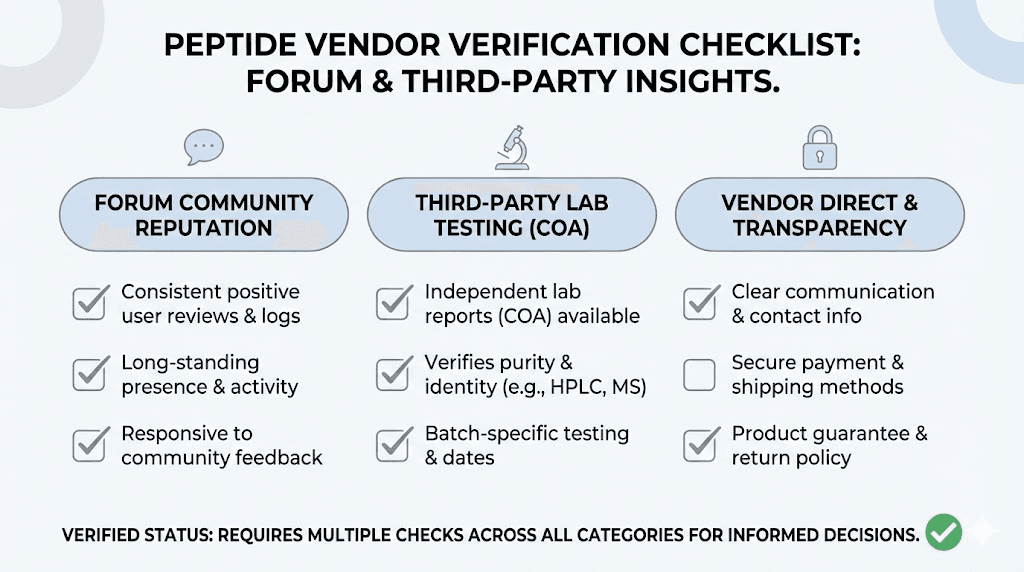
- We utilize GC-MS, ICP-MS, and various other approaches to find pollutants, guaranteeing item safety and security and regulatory conformity.Peptide purity is generally shared as a portion, such as 95% or 98%.Research laboratory recognition for peptides implies utilizing scientific examinations to verify a peptide's identification, purity, and structure.This is why trustworthy distributors give both HPLC and MS information on their Certifications of Evaluation.
The dissolved peptide example is injected right into a stream of liquid solvent (the mobile stage) that flows via a tube packed with tiny particles (the stationary phase). Various molecules "stick" to those particles with various toughness, so they take a trip via the column at different speeds. Refined distinctions in basic material pureness and framework can lead to inconsistencies in the task of the final product.
Conventional Pureness (≥ 95%)
BOC Sciences supplies extensive peptide testing solutions to customers across industries, ensuring products fulfill rigorous market demands and ensuring product uniformity, safety and security, and effectiveness. It additionally supports traceability-- each batch's laboratory validation report can be tied to its COA and governing filings, developing a clear proof. Simply put, strenuous lab recognition is how you confirm to regulatory authorities that your peptide fulfills all high quality specifications. It assists stay clear of compliance problems such as failed audits or product remembers due to quality defects. This not only pleases lawful requirements but eventually secures client security.
Picking the appropriate external lab for peptide screening entails examining a number of elements. A relied on lab needs to have demonstrable experience in peptide chemistry analysis-- as an example, PhD-level chemists or biochemists on personnel that recognize peptides' synthesis and deterioration paths. Certification by appropriate bodies (such as ISO/IEC or accreditation for GLP/GMP compliance) is a strong sign of high quality.
Along with HPLC and MS, specialized labs might use orthogonal techniques for included accuracy. For instance, capillary electrophoresis can be used to separate extremely hydrophilic peptides or to ascertain outcomes, and MALDI-TOF mass spectrometry can assist in mapping larger or customized peptides. Numerous peptide manufacturers or providers will supply a COA (Certification of Evaluation), for instance our bpc 157 tb 500 blend, that consists of the purity percentage by HPLC and identity confirmation by MS for each set. Top-tier labs usually report peptide purity well over 95%, regularly ≥ 98-99%, by utilizing state-of-the-art HPLC and MS analyses. They additionally test both resources and finished peptide vials, which helps catch any impurities, deterioration items, or solution disparities. In basic terms, a peptide detailed as 95% pure is composed mainly of the target peptide (95%), with the staying ~ 5% comprised of contaminations. These pollutants can include points like shortened or abbreviated sequences, deletion variants, oxidized residues, or various other small side-products from the synthesis procedure. Peptides are widely made use of in the clinical looks, cosmetics, and biomedical fields as a result of their unique organic activity and wide application potential. However, the quality of peptide items straight impacts their efficiency and security, making exact top quality testing solutions critical.